
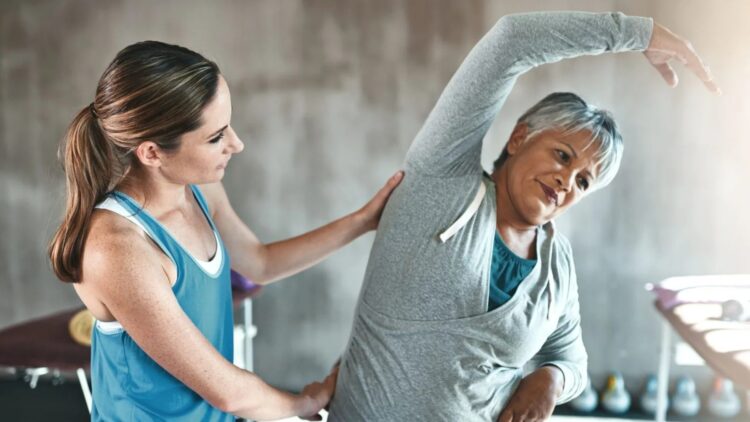
For adults over 70, the key to preventing falls does not necessarily lie in extreme exercise, but in more manageable practices like Pilates. This method has proven to be an effective tool for improving balance by strengthening the deep muscles of the pelvis, glutes, and lower back, which are critical areas for maintaining physical independence.
Beyond strength, Pilates teaches the body to move with control and balance, reducing stress on the joints and improving hip mobility. By focusing on body awareness, it also makes everyday tasks like climbing stairs or reacting to a stumble safer activities. With a simple routine of key exercises that can be done at home, it is possible to transform frailty into firmness, making daily balance something you can rely on.
Physical activity to fight aging
When a person reaches a certain age, the muscles of the body lose their strength and tone in the same way that the joints become more fragile, all of which interferes with the ability to move independently and with balance. That is why it is important to incorporate some exercises and stretches into daily life to combat these losses, making the body once again our most reliable tool for mobility. Although activities like yoga or strength exercises provide highly beneficial benefits, another option is Pilates. This practice is capable of increasing strength around the hips, improving joint control, and sharpening the sense of where the body is in space.
Regaining balance
Regular Pilates practice not only restores muscle mass to the body, but it is also useful for reducing reaction times when stumbling, and for increasing hip mobility, which becomes increasingly stiff if not exercised. It is a perfect technique for learning to distribute weight across the joints, specifically in the knees, ankles, and lower back. Regaining the ability to rotate and bend the joints, as well as being able to perform slow and controlled movements, is essential as we age. One of the most appealing aspects of this practice is that it does not require equipment or intense routines; it can be done at home with just a chair, a mat, and motivation.
How to incorporate Pilates into your routine
Here are some exercises you can add to your routine to improve balance, joint strength, and regain hip mobility. Always remember to consult with your doctor or a professional before starting any practice.
- Standing kickback: Stand with your feet hip width apart and hold a countertop or sturdy chair for support. Shift your weight to your right leg. Bend the right knee slightly. Lift your left leg behind you a few inches, keeping the knee straight. Squeeze your glutes at the top of the lift. Lower it with control. Repeat for about a minute, then switch sides. If you want more challenge, add a light ankle band.
- Side lying leg kick: Lie on your side with legs long and stacked. Support your head with your lower arm. Place your top hand in front of your chest for balance. Lift your top leg a little and sweep it forward. Pause, then pull it behind you without twisting your hips. Continue for a minute, then change sides.
- Side lying leg circle: Stay in the same side-lying position. Lift your top leg to about hip height. Draw small circles in the air while keeping your hips still. Halfway through the minute, reverse the direction. Switch sides and repeat.
Frequently asked questions
Why does Pilates help prevent falls?
Because it strengthens the deep muscles of the pelvis and glutes, improving balance and the ability to react quickly to a stumble.
Do you need special equipment to practice it?
No. It can be done at home with basic items like a chair for support, a mat, and controlled movements.
What benefits does it offer for daily life?
It increases hip mobility and reduces stress on the joints, making tasks like climbing stairs, turning, or bending easier.