
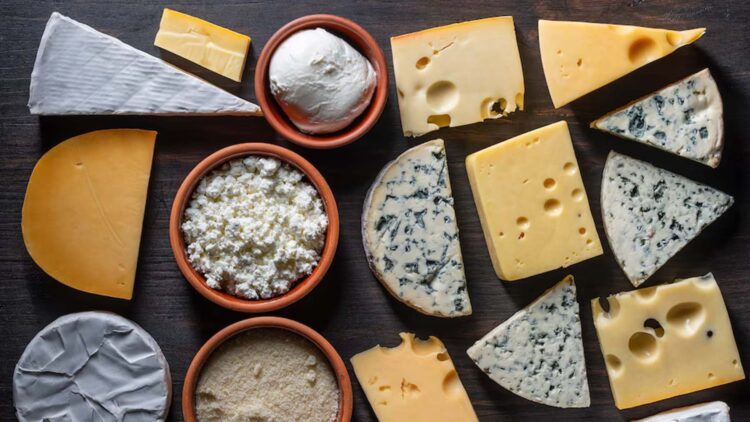
Eating high-fat cheese on a daily basis may be associated with a less forgetful brain, according to a Swedish study.
Emily Sonestedt, an epidemiologist at Lund University nutrition, explained that “For decades, the debate over high-fat versus low-fat diets has shaped health advice, sometimes even categorizing cheese as an unhealthy food to limit,” “Our study found that some high-fat dairy products may actually lower the risk of dementia, challenging some long-held assumptions about fat and brain health.” She continued.
The researchers who followed 27,670 adults for about 25 years showed that those who consumed at least 50 grams (about 1.76 ounces) of high-fat cheese, including brie, gouda, cheddar, parmesan, gruyere, and mozzarella, had a lower chance of getting this illness.
The research, which was published in Neurology, helps contribute to continuing discussions about how common foods may affect brain health in the absence of effective therapies.
What the study did and didn’t show
The researchers used data from the Malmö Diet and Cancer cohort; an observational study that monitors long-term health outcomes and conducts dietary surveys.
To record the participants’ consumption of food, they used a A 7-day food diary, a food-frequency survey, and a thorough interview regarding cooking and eating habits. 3,208 participants experienced dementia over a period of about 25 years, including common types like vascular dementia and Alzheimer’s disease.
When researchers compared individuals according to the amount of cheese they ate, a different pattern appeared: People who consumed more than 50 grams of high-fat cheese daily had a 13% lower risk of all-cause dementia compared to those who consumed less than 15 grams, even after adjusting for age, sex, education, and overall diet. Dementia affected about 10% of the higher-intake group and 13% of the lower-intake group.
Furthermore, no comparable correlation was found for any type of milk, fermented milk products like kefir and yogurt, or low-fat cheese or cream.
In addition, there were some conflicting findings about butter, including a potential link between high butter consumption and an increased risk of Alzheimer’s disease.
Cheese might be positive, but more research needs to be done
Because cheese is both popular and frequently referred to as “indulgent,” this outcome can shock some people. The finding is talking about controlled amounts of cheese, though: A little bit of mozzarella on a salad, a few cubes of gouda with fruit, or a thick slice of cheddar on toast—with a limit of 50 grams per day.
However, wise health decisions focus on the entire plate and person, not just a single food. The so-called MIND diet, a Mediterranean-style pattern frequently discussed in research on brain health, has been seen as promising, but results from various studies are contradictory.
For instance, research from Finland, the UK, and Japan has revealed different links between dementia and cheese. Additionally, it’s critical to keep in mind what this study can and cannot accomplish. While observational research can spot trends, it can’t show that cheese prevents dementia or provide an explanation for the biological mechanism underlying the association—yet.
Researchers point out that more research is needed to figure out whether or not this association exists outside of this group, as well as how and why.
Avoiding Dementia: an eveveryday healthy lifestyle
You don’t have to feel guilty about eating high-fat cheese if you like it, but you should watch the quantities: Brie, gouda, cheddar, parmesan, gruyere, and mozzarella are high-fat options (more than 20%). So eating 50g per day could be associated with a lower risk of all-cause dementia in this group; however, eating too much hasn’t been proved to be better.
“It is highly likely that diet and other lifestyle factors changed in those 25 years,” warns Tara Spires-Jones. So the results show association not proof. Therefore, exercise, sleep, and social interaction are still top priority to help to a healthier brain, besides cheese.