
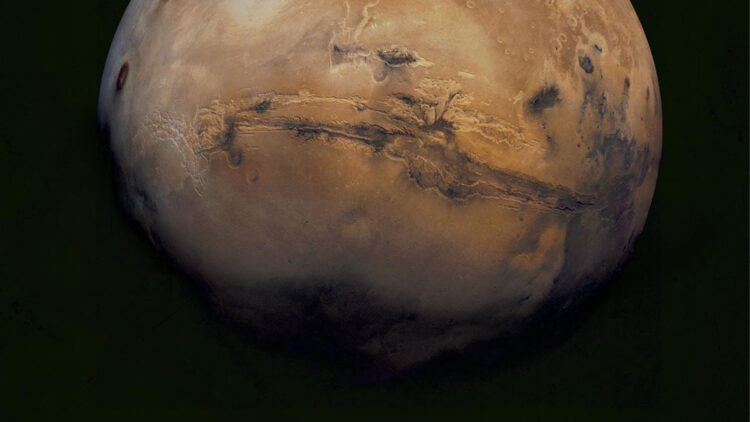
There’s so much more to what happens on Mars than we usually think of; and I’m not even talking about discoveries… I mean rules.
Did you know that there are laws that forbid you to go to some parts of Mars? Although it’s still one of the most promising places to look for the possibility of human life besides Earth, we cannot go around as we please.
There are zones to land, zones to investigate, and zones to respect—stay away from. However, these are forbidden with a good reason: protection, agreements, and hope.
Why there are limited zones in Mars
There is a document that was signed by the great powers during the space race in the 20th century. The Outer Space Treaty in 1967 would change completely our relationship with the cosmos.
They established that any country can contaminate other worlds with terrestrial life, which is a principle that even today defines the rules in science. However, it wasn’t a situation to avoid a “I saw it first, now it’s mine.” Scientific precision was the goal back then, they thought that if we went there and took microbes to the space with us, then they would install there too. Therefore, experts wouldn’t be sure of what’s really Martian and what comes from us.
Mars research advanced and chances of life in there (or in the past) stopped being so much of a dream. So decades after the agreement, the Committee on Space Research (COSPAR) developed stricter guidelines: “Space region” were born. What were these? Zones that were allowed to be visited, and where the conditions could allow survival or multiplication of terrestrial microbes.
These regions are potentially humid or have adequate temperatures, which can represent other risks, like contamination by mistake, or a false positive in the search for life. So, for missions that pretend to get close to these zones, they have to follow extremely detailed protocols.
Untouchable discoveries and theories hard to prove
There are signs of very promising spots for life on Mars; although it’s arid and dead on the surface, the so-called slope lineae (RSL)—precisely those zones we cannot touch—are some of them: They have mysterious dark lines that show on Martian slopes during certain seasons. At first, scientists thought it was water deposits flowing very slowly; today we know it’s not the case, and probably it’s just dry flows of sand (although the doubt is still there).
Studies have shown the possibility of huge liquid water masses between 11 and 21 kilometers under Martian surface. If that’s confirmed, it would be enormous, but sadly, also completely out of reach for any actual mission.
The rover Perseverance, from NASA, did a recent search for biosignatures in the Bright Angel formation, in Cheyava Falls, and it has turned on a debate: If the signals found were to be biological, the scientific community would have to make sure they don’t come from terrestrial contamination.
Protecting yes, but not only Mars
Some experts have proposed to soften the rules, arguing that terrestrial life could hardly thrive on Mars. But, at the same time, that idea goes against a scary truth: us, terrestrials, we keep living and surviving here on Earth, besides facing conditions we never thought we could be capable of bearing; from microbes in submarine volcanos to batteries that tolerate extreme levels of radiation. We are still here, and the limit line of what we can survive seems to be moving a little bit further every year. Which could mean that our own microorganisms could cope with Martian environments.
However, the Outer Space Treaty from 1967 also warns that if any Martian microbe exists and gets to Earth somehow without quarantine, no one could predict the impact.