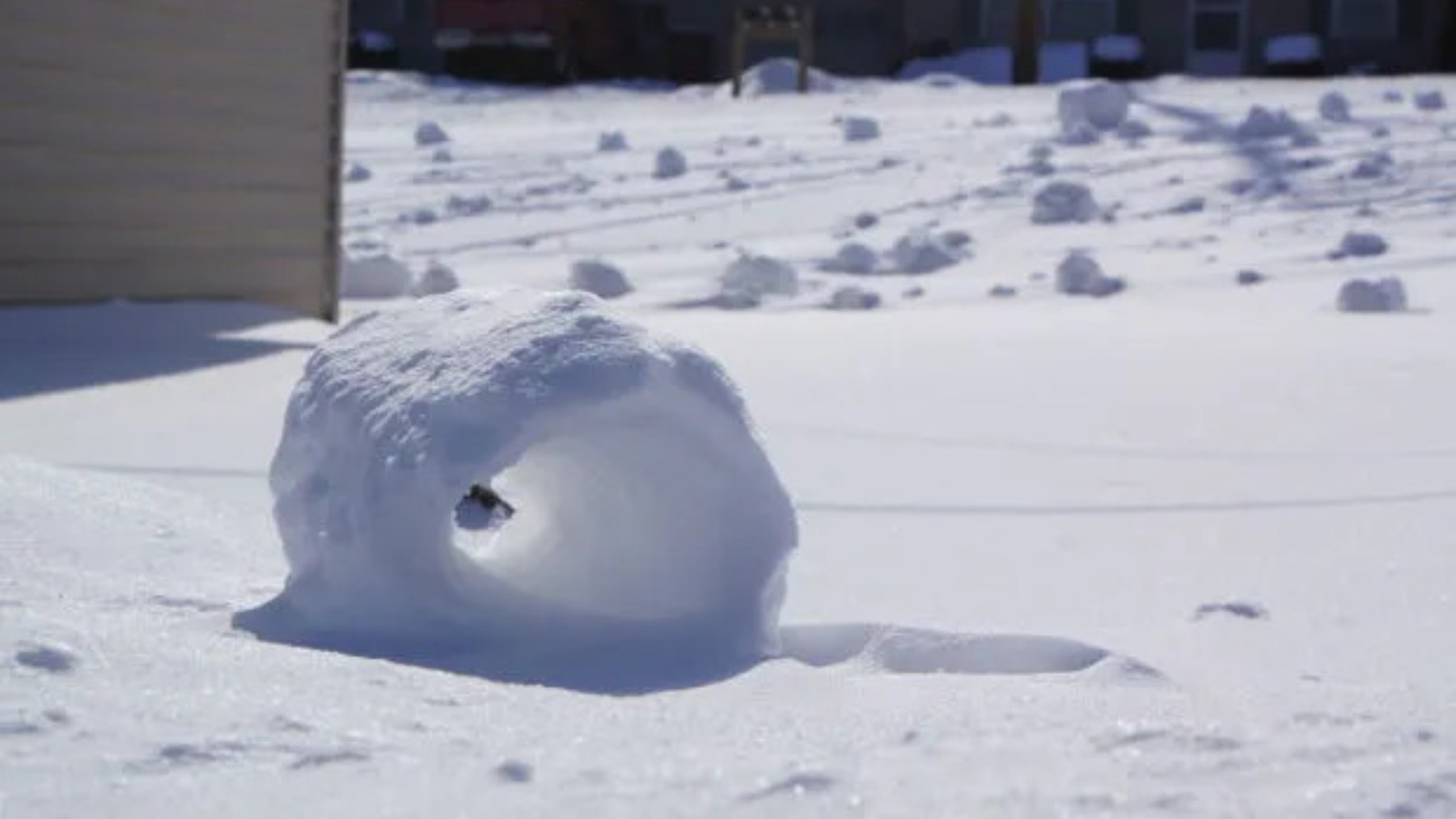
Last January 2014, the state of Ohio, also known as Buckeye, was the scene of a most unusual weather phenomenon known as Snow rollers. These are formations that amazed scientists and the public because of their size and rarity. The magical event occurred between January 27 and 28, 2014, when the fields and highways in regions such as Dayton, Columbus, and Cincinnati were covered with thousands of these snow rollers. Their formation requires a specific process, as well as certain weather conditions that combine wet snow, freezing temperatures, and strong gusts of wind.
Snow rollers in Ohio
Also known as Buckeye, Ohio was the state that experienced one of the most unusual weather phenomena. It took place between January 27 and 28, 2014, when highways and fields in regions like Dayton, Columbus, and Cincinnati were covered with snow rollers. Unlike snowballs that need our hands to take shape, snow rollers are cylinders with a hollow shape, similar to a tire or a donut, and come in varying sizes.
While some go unnoticed, others can reach the size of a car tire or even several tires together. The formation of a snow roller requires a prior layer of ice to serve as a slippery base for fresh, wet snow to settle on top. When gusts of wind with the exact force start pushing the top layer, it curls over itself. If the wind is too weak, the snow doesn’t move; if it’s too strong, the structure disintegrates. The process continues until the wind stops, leaving behind a landscape full of perfect cylinders.
Importance of the event
Although this phenomenon has occurred sporadically, no date is as remembered in U.S. meteorological history as January 27 and 28, 2014, when residents of Ohio woke up to find thousands of snow rollers covering gardens, rooftops, and main roads. While for the general population it was mostly a logistical problem, for experts it was a perfect event to study in depth the physics of snow and how temperature and wind interact. For years, it has been assumed that terrestrial phenomena are fully cataloged, but incidents like the 2014 snow rollers show that there are still mysteries to be solved.
Frequently asked questions
What exactly are snow rollers and how do they differ from a regular snowball?
Unlike human-made snowballs, snow rollers are natural cylinders with a hollow center, similar to a tire or a donut. Their size ranges from tiny, almost imperceptible pieces to structures as large as a car tire or even several of them together.
What weather conditions are necessary for this phenomenon to occur?
For them to form, an extremely precise combination of three factors is required: a pre-existing ice layer that serves as a slippery base, fresh and wet snow deposited on top, and gusts of wind with just the right strength. If the wind is too weak, the snow doesn’t move, and if it’s too strong, the structure disintegrates before forming.
Why is the January 2014 event in Ohio so important for science?
Occurring between January 27 and 28, 2014, in areas such as Dayton, Columbus, and Cincinnati, this event is iconic for its magnitude, covering fields, roads, and rooftops with thousands of snow rollers. For scientists, it was a perfect case study to analyze the physics of snow and the interaction between wind and temperature, demonstrating that there are still natural mysteries to be solved.