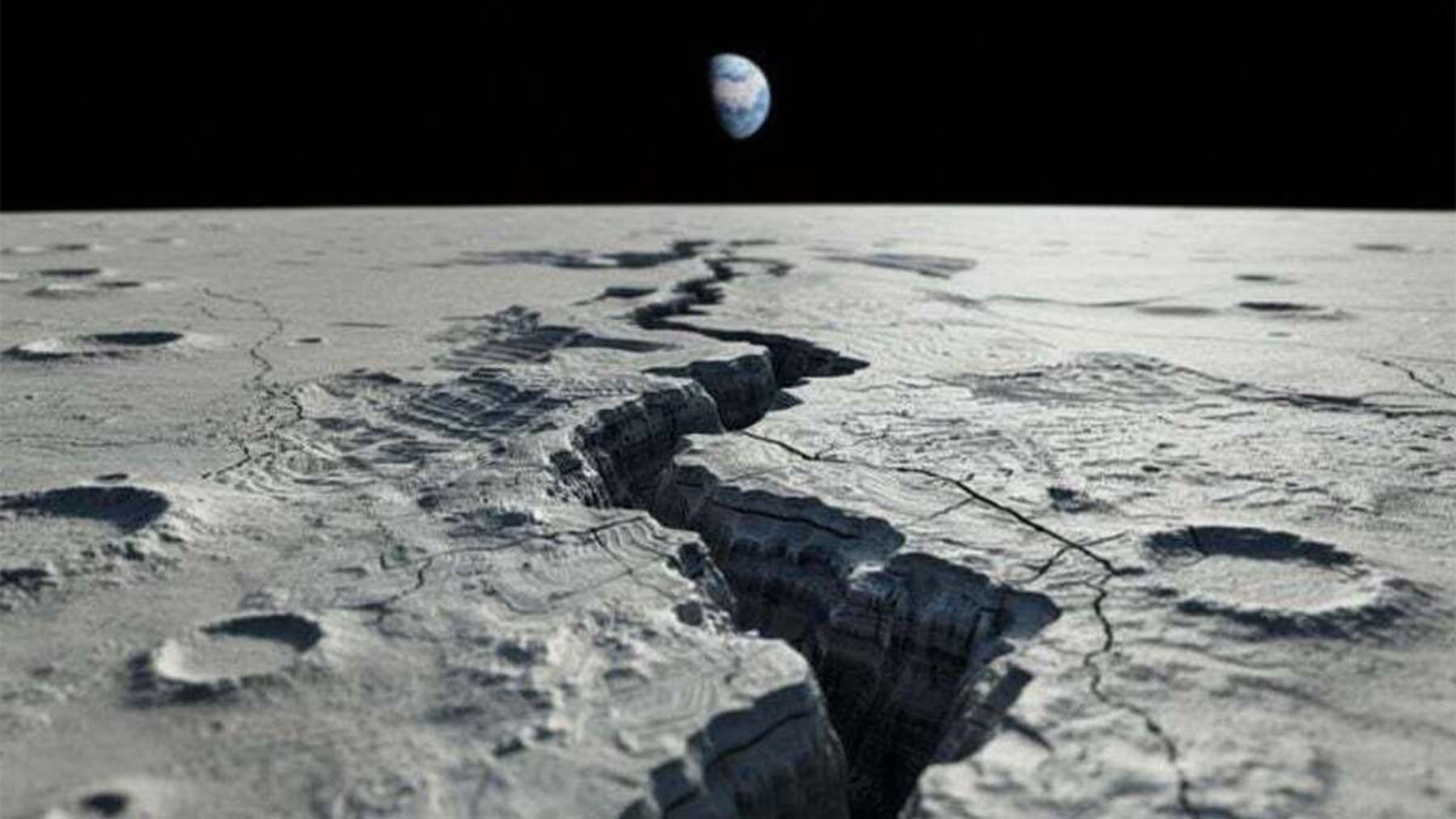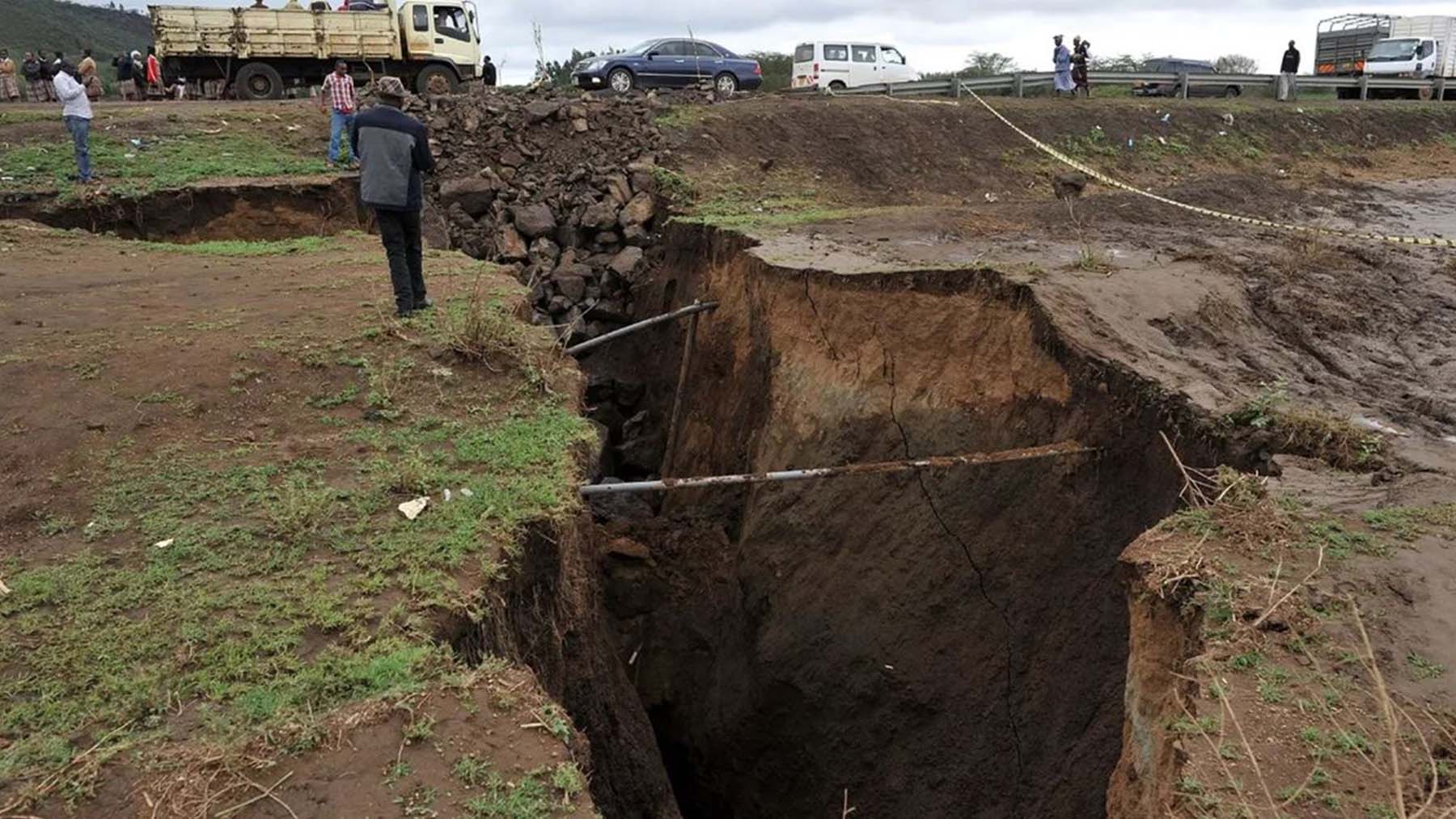
Africa is going through a dramatic transformation because tectonic forces are pushing the continent toward the creation of an entirely new ocean. It looks like it’s breaking in two, and the huge system of faults and fissures in the East African Rift System is rapidly changing the geography of the area.
Scientists are finding information they didn’t expect about the future of this phenomenon; the plates are separating more quickly than anticipated and it looks like a new ocean could form sooner than planned.
In Africa, a new ocean is forming
In the East African Rift System, tectonic forces are allowing a new ocean to form. This phenomenon stretches from Mozambique to the Red Sea, but it could affect all of the continent.
According to recent research, the region’s plates are breaking apart more quickly, which could change the ecosystems and landscape in the following millennia. Scientists believed that it would take tens of millions of years for this to happen, but this process is now predicted to take place within a million years—if not sooner.
What’s making the ground move so fast? The African and Somali plates are moving at a rate of about 0.8 centimeters per year, and this is creating a serious rift in East Africa.
On a human timescale, the changes are slow, but they already show the beginning of a new ocean basin.
Geoscientist Cynthia Ebinger of Tulane University highlights how quickly this change is happening: “We’ve reduced the timeframe to about 1 million years, possibly even half that,” Ebinger says. Although it is still difficult to accurately predict this sort of thing, she points out that a major seismic event, like an earthquake, could speed up the process even more.
What the rift in East Africa tells us about the origin of oceans
Most of the land on Earth was part of a single supercontinent known as Pangaea between 335 and 175 million years ago. It progressively began to crack and split, forming the continents that we know today. But there were no people, no writing, no memory, and no records at the time.
However, right now, in the East African Rift continental crust is going through a real-time transition to oceanic, illustrating the formation of the Atlantic. This makes it possible to investigate the mechanisms behind plate movement and the creation of novel geological formations.
The rift’s unpredictable nature was revealed through an event that happened in Ethiopia in 2005: more than 420 earthquakes in a short period of time caused a major fissure in the Afar region, which is known for its extremely high temperatures and dry conditions. When what usually takes centuries took days, predictions about geological timescales were put into doubt.
The geography of the continent could be drastically changed by the formation of a new ocean. Expanding coastlines could change economies and ecosystems in landlocked nations like Uganda and Zambia.
Potential impacts of the formation of a new ocean
Experts highlight four main changes that could come from the forming of a new ocean:
- Geographic changes: new coastlines and potential continental division.
- Economic implications: opportunities for trade for nations that did not previously have access to the sea.
- Ecosystem changes: formation of marine environments.
- Infrastructure challenges: changes to coastal areas and land management.
In this process, researchers also face challenges. Improved monitoring, understanding of environmental effects, and more accurate prediction models all depend on interdisciplinary collaboration.
Getting ready for a new ocean
To prepare the community for bigger impacts, the accelerated timeline needs to improve models of plate movement, seismic activity, and crustal transformation.
The new ocean in East Africa is a reminder of Earth’s changing nature. Only this time, scientists can record it.