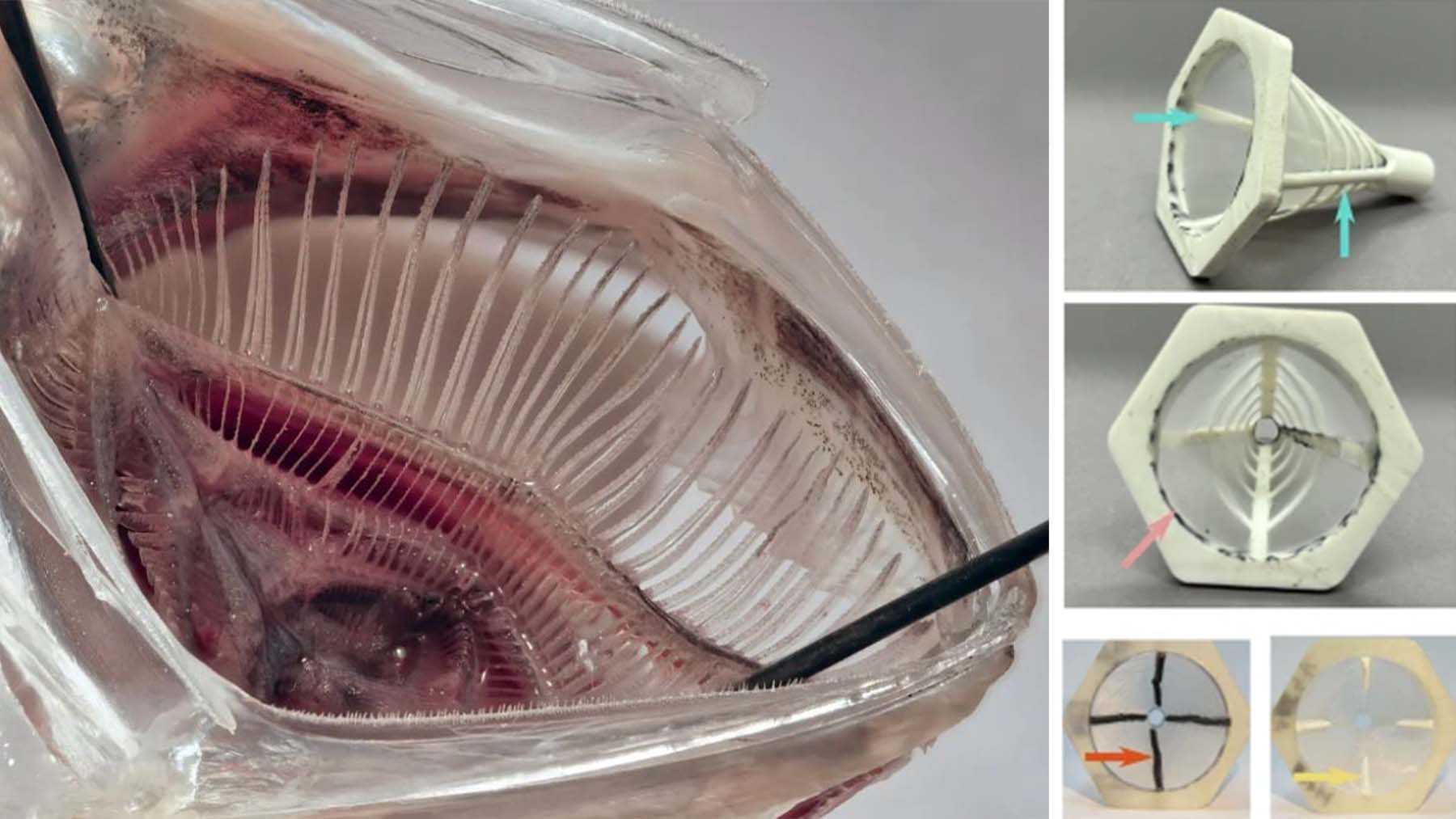
German researchers have developed a method to eliminate 99% of plastic particles from water, inspired by fish and their natural filtration system used to catch microscopic prey.
Microplastics can originate from a variety of sources, but washing machines are one of the most well-known sources. Millions of microplastic fibers are released into nearby waterways from our clothing each time a load of laundry is completed.
A study that was published in NPJ Emerging Contaminants claims that up to 90% of the plastic in “sewage sludge” comes from washing machines. This material is often used in agriculture as soil or fertilizer, leaving people exposed to these pollutants if they eat the resulting crops.
Although it is still unknown how microplastics impact human health when they infiltrate our bones and organs, some toxicologists are alarmed by their preliminary findings in animals.
How fish mouths inspired a new microplastic filtration system
Microplastics have been a problem for a while, but it’s been difficult to figure out how to stop plastic pollutants from escaping our washing machines, as the filtration systems currently on the market are prone to clogging.
Researchers from the Fraunhofer Institute for Environmental, Safety, and Energy Technology and the University of Bonn looked to nature for inspiration. They decided to create a water filtration system that looks like the mouths of certain fish, such as anchovies, mackerel, and sardines.
These marine animals swim through the water with their mouths open to catch plankton. They have developed comb-like structures inside their mouths over millions of years to trap microscopic prey.
“During food intake, the water flows through the permeable funnel wall, is filtered, and the particle-reduced water is then released back into the environment via the gills,” says University of Bonn functional morphologist Alexander Blanke.
“However, the plankton is too large to pass through. It is held back by the natural sieve structure. Thanks to the funnel shape, it then rolls toward the gullet, where it is collected until the fish swallows, which empties and cleans the system,” Blanke continued.
A new washing machine filter that reduces microplastic pollution
Researchers created a cone-shaped filtration system with a mesh-like surface based on this anatomy. Unlike other filtration systems, plastic particles roll along the edge of the new device instead of hitting the mesh directly.
As wastewater flows through the device, this increases the surface area available for filtering. Like the lint filter in a dryer, the plastic particles are collected outside the filter and directed into a separate compartment that can be emptied every few dozen washes. This system reduces clogging by 85% compared to other plastic filtration systems on the market.
According to recent estimates, at least 5.6 million metric tons of synthetic microfibers have been released from our clothing since the 1950s, when materials like polyester and nylon were first mass-produced.
An optimistic step toward cleaner rivers
While many people are now aware of plastic pollution in their kitchens, clothing continues to release pollutants into the environment, often unnoticed. Unless the materials used in clothing change, high-efficiency filtration systems will be essential to reduce this type of pollution.
Although microplastics come from many sources, not just washing machines, this discovery offers a promising way to reduce one of the most common contributors and lower the risks.
The research team hopes their invention will help reduce a widespread form of plastic pollution that many people are unaware of. They have already filed a patent application in Germany.