
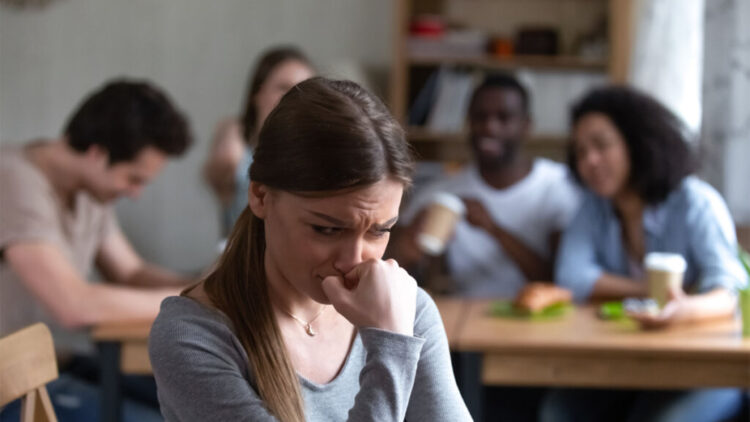
Have you ever felt left out of a conversation or even an opportunity? According to David Brooks, we live in the “more rejected generation” era. He told The New York Times this after interviewing young people who are getting “no’s” at jobs, dates, mortgages, and colleges.
Social psychology expert Roy Baumeister discussed the impact of social rejection on people’s thoughts and actions with BBC News Brazil. Although the effects are more pronounced in Generation Z, almost everybody in today’s highly competitive society is impacted by digital relationships, online communication, anxiety, decreased empathy, and increased aggression, which also poses problems for mental health and loneliness.
Rejection, competition, and the “domino effect”
Brooks continues by describing how young people only get one or two “yes” when they apply to 20 or 30 universities. Regarding careers and romantic relationships, this same pattern seems to continue. According to Baumeister, it is “quite possible” that we are encountering more rejection today. Although there aren’t many more spots available at the top universities, there are more applicants to choose from. Additionally, there is a sort of grade inflation that encourages more and more applications while also making the competition more difficult.
According to Peter Turchin, there are more graduates than there are open positions. Rejection is as brutal as the race.
On the romantic side, more compatibility errors could happen due to the large number of apps that match users based on quick traits, leading to more “no’s.”
All of these situations immediately lead to lower empathy, higher aggression, and a reduction in cognitive function. It is not melodrama; lab-measured facts support this conclusion.
The internal story also changes. Many people feel unworthy after receiving a “no,” asking themselves, “What went wrong?” or “Why is this person not interested in me?” The cycle also repeats in academic work and employment: silence or criticism, followed occasionally by a “Sorry, we can’t publish your work.” Reactions pile up and put pressure on modern society if rejection increases, so the map isn’t just personal.
When the personal moves from “me” to “us”
The social climate changes when a large number of people experience the same thing. According to Baumeister’s colleagues, “…social groups that feel rejected… become more aggressive and less willing to work for the common good.” In addition to causing pain, social rejection changes behaviors in several ways. Strangely, the first symptom was not obvious distress but numbness. It makes interactions more difficult even though it is temporary.
In love, sayings like “Oh, it’s not you, it’s me” try to soften the shock in romantic relationships. For example, “If I was rejected today, will it happen again?” Baumeister is cautious when it comes to health: although medical care has improved and we live longer, loneliness still has an important effect. More single-person households could bring additional risks if they break off from important relationships; those who receive visits and support recover more quickly.
This situation demands the use of strategies that protect mental health without pathologizing it, as Generation Z was raised with metrics and filters.
Balancing screens and presence
How can we avoid becoming cynical? Baumeister makes the suggestion to try again, somewhere else. Your mood is reframed by acceptance. A useful guideline for online communication is that it is generally beneficial to use it in addition to face-to-face interaction; replacing it complicates digital relationships and makes people unhappy. In order to prevent bonds from remaining at the surface, it is important to combine screens with presence.
Since Generation Z is growing up in an era of intense rivalry and algorithms, it is not “weak.” Self-care is made possible by knowing the circuit. It’s worthwhile to stop, look for help, and, if at all possible, reestablish contact in person if feelings of anxiety or less empathy come up.