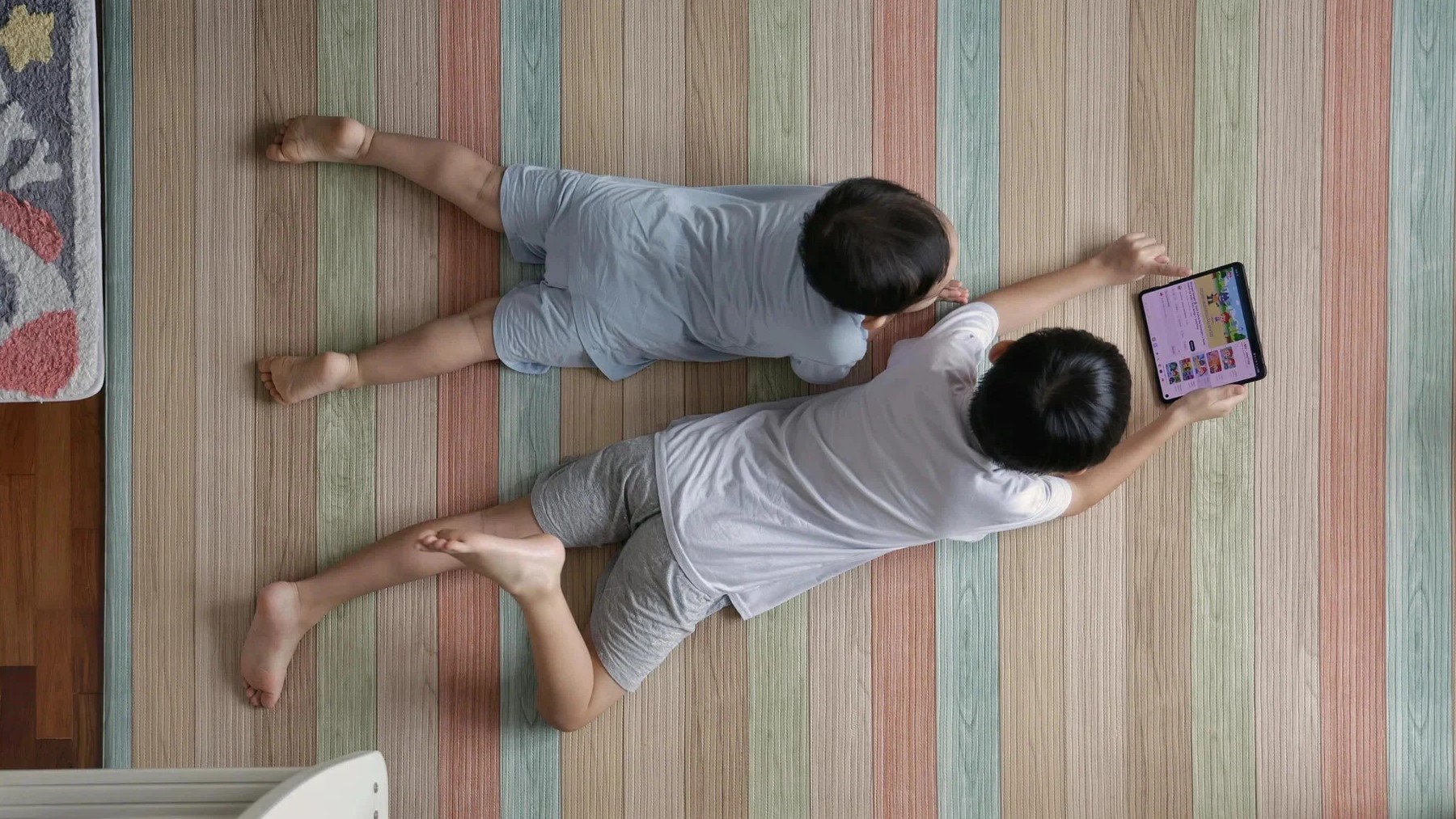
For more than 10 years, the A*STAR institute in Singapore has been conducting the study called Growing Up in Singapore Towards Healthy Outcomes (GUSTO), which has followed over 1,400 mother-child pairs since 2009. Through this study, they have examined the consequences of exposing a child under 2 years old to screens, concluding that it artificially accelerates the maturation of certain areas of the brain. This is far from positive, as it causes children to be slower at making decisions at 8.5 years old and to experience more anxiety when they turn 13.
Growing Up in Singapore Towards Healthy Outcomes (GUSTO)
For many parents, turning to the use of screens to keep their children entertained is often an option, but the truth is that the price to pay for the consequences it generates is very high. The A*STAR Institute in Singapore has carried out the Growing Up in Singapore Towards Healthy Outcomes (GUSTO) study, which has followed more than 1,400 mother-child pairs since 2009. The results revealed something that caught the researchers’ attention: the brains of those who watched a lot of screens specialized too quickly in vision and basic cognitive control.
The lead researcher, Dr. Huang Pei, explained: “During normal development, brain networks gradually specialize over time. However, in children with high screen exposure, the networks that control vision and cognition specialized more quickly, before developing the efficient connections needed for complex thinking.” The result of this practice is the formation of a brain with low flexibility and less ability to adapt to changes.
From screen use to adolescent anxiety
A priori, a 2-year-old child spending time in front of a screen has been directly linked to emotional problems decades later. Researchers performed MRI scans at ages 4.5, 6, and 7.5, and the results were clear: that early maturation is directly associated with higher levels of stress and anxiety in adolescence. Additionally, the World Health Organization warns that for 1-year-old children, screen time should be zero, and for 2-year-olds, no more than one hour.
The study team is concerned because their data (from between 2010 and 2014) showed an average of “more than one to two hours daily,” and they believe that today, after the pandemic, the figures are much worse. “The already elevated levels of screen exposure we observed a decade ago are likely even higher today, making the developmental implications of our findings especially urgent,” they commented.
What can be done about it?
The study’s results also revealed that children whose parents read them stories at age 3 showed a much weaker connection between screen time and negative brain changes. According to A*STAR researcher Tan Ai Peng, “This research gives us a biological explanation for why limiting screen time in the first two years is crucial. But it also highlights the importance of parental engagement, showing that parent-child activities, like reading together, can make a real difference”.
Frequently asked questions
How does screen use affect babies’ brains?
According to the A*STAR study, exposure before the age of 2 artificially accelerates the maturation of visual and cognitive areas. As Dr. Huang Pei explains, this prevents the development of efficient connections for complex thinking, reducing the brain’s flexibility to adapt to changes.
What are the long-term consequences of this habit?
The research links early screen time with slower decision-making at 8.5 years old and higher levels of stress and anxiety by age 13. This is because the premature maturation of the brain disrupts healthy emotional development.
What activities can help reduce these negative effects?
Shared reading is the best antidote. The study showed that children who are read stories at the age of 3 have a much weaker connection between screen use and brain damage, as interaction with parents promotes more balanced development.