
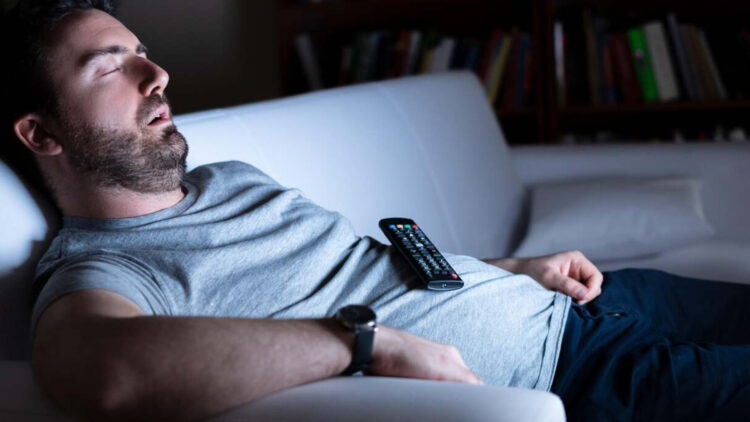
Have you ever fallen sleep with the television on? Experts explains what happens to the brain in this situation, and newsflash; the impact might be worse than many people think.
It happens more often than we would like; you put the television on after dinner, or on a weekend’s night to watch a movie and—finally—chill, but suddenly the fatigue comes in and you end up closing your eyes “just a few second ”… A few hours later you wake up realizing the movie is finished and you feel even more tired that before. Sounds familiar?
Apparently, it can be much more negative than most of us think.
What’s falling sleep with the TV on doing to us?
When we are trying to sleep but there’s screen light in front of our eyes, that light tells our brain that is daytime, and that reduces the secretion of melatonin and makes it difficult to sleep—and stay asleep. The brain doesn’t have access to the deep sleeping phase, known as REM. Which is very, very important to recover physically and mentally. If your body doesn’t get to do all of this while you are sleeping, you only get a poor quality rest and a superficial sleep.
In addition to this, the visual and audio content going on on the screen, keep your brain active, receiving information and highly cognitive stimulated.
The problem is that when this happens, you are not really disconnecting, instead, your mind goes to an alert state that can provoke nervous dreams and wake you up suddenly and repeated times.
And the cheery on top: all of this alters the circadian rhythm by misadjusting the biological clock.
How it affects daily life
The impact of falling sleep with a screen in our face is not that inoffensive, and still, most of the time we don’t even relate it to its cause.
If it happens once every full moon, it might mess up slightly with your mood or sleeping time the next day, but it won’t be that serious. The real problem comes when people do it too repeatedly—or it becomes a habit.
If you have a tv on your bedroom, and just constantly “fall sleep naturally” with the television on, you are repeating the disruption every night; there’s also a big chance that the TV screen stimulation will make you fall sleep later that you “wanted to” which, on top of it, shortens the sleeping time overall.
At that moment, the consequences will be more significant: Fatigue, stress and concentration problems, increase in blood pressure and possible long-term mood disorders.
How can we avoid it?
When we fall sleep with the TV on is often unconsciously, we don’t say “tonight I would like to fall sleep in the middle of that episode,” it just happens at some point.
If this happens tu you a little to often, and want to stop it, there are some things you can do:
- Give yourself windows of time to watch that show, or that movie, but always respecting your sleeping hours; you can put a timer so the TV turns off automatically, just in case. Ideally, you should stop watching any type of screens 1 hour before going to bed.
- Soften the lights if possible, especially around the time you are going to bed. This way your brain starts understanding is time for resting.
- Experts recommend to create a routine just before sleeping. Instead of watching TV, you can read, or listen to calm music; softer things for the brain.
The steps are not difficult to follow, and once you start doing it, you will probably feel a big difference on your daily life—better mood, feeling rested, waking up with more energy—and will make it a habit.