
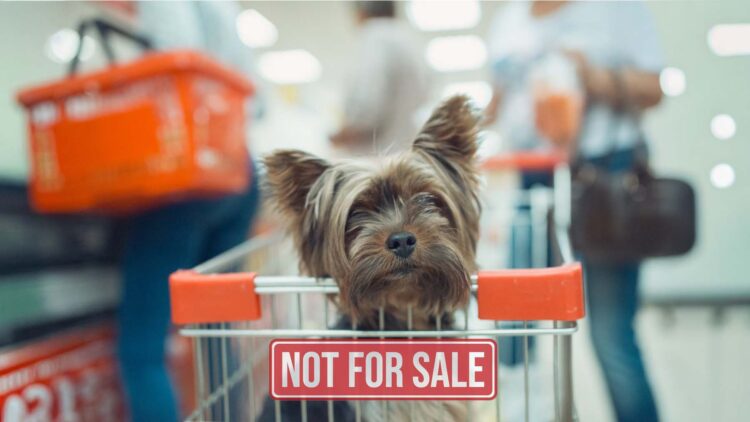
Buying dogs or a cats in a local shop in New Jersey could become nearly impossible very soon. Lawmakers have advanced a bill that proposes that pet shops stop selling dogs, cats, and rabbits. The idea is to fight puppy mills and guide families towards shelters and rescues. If it’s approved, there would be now fines of $1,000 for each animal sold, and after three violations a judge would revoque their license, with the possibility of a permanent ban.
What changes for business owners
The bill would forbid pet shops from selling dogs, cats, and rabbits. The enforcement would be fines of $1,000 per sale, a court would be required to revoke the store’s license after three fines, and judges could even permanently prohibit a pet shop from operating in the state. It would repeal the Pet Purchase Protection Act and replace it with stronger rules and guidelines for adoption centers.
Right now, the law says pet shops must obtain animals from breeders licensed by the U.S. Department of Agriculture and in good standing with state and federal regulators. Breeders who violate animal welfare laws or lack proper licensing are blocked from selling animals in New Jersey.
For supporters, this is not enough, they believe there are to many transparency issues and risks for the end buyers, who’s pets then face conduct or medical problems. They propose to cut retail sales and concentrate access in shelters, rescues and reputable breeders. The bill, is a closer step closer to make that the law.
Arguments in favor—and criticism
Supporters point out the evidence is already in public view: “It is well-documented that New Jersey puppy stores are currently sourcing from massive Midwest breeders and brokers with awful animal welfare records and are repeatedly violating the state consumer protection law,” said Ariel Lefkovits from Humane World for Animals.
They also warn about the impact on homes when a pet arrives with unreported problems. As Camden County Commissioner Jeff Nash explained: “Many unsuspecting consumers of puppies are unaware of the medical and behavioral issues inherent in dogs bred at horrific puppy mills.” Y he added: “Unlike other products, a dog isn’t something you can just return. Families form emotional bonds and will do anything to keep that pet healthy.”
In September, the state’s consumer affairs division fined eight pet stores for violating the Pet Purchase Protection Act. Only Oh My Dog in Kearny was sanctioned for buying puppies to a unlicensed breeder. The others got fines for not having mandatory information: histories, vaccine records, consumer rights notices, dates of birth and breeder inspection reports.
On the other side, some shop owners argue that many stores already follow the rules, use credible breeders, and welcome oversight. “There’s a lot of misinformation going on,” said Thomas Gallo, from Pet Center in Old Bridge. “None of these activists or Humane Society or Humane World for Animals have been to the breeders we use and we have.” His store was fined $12,500 in September; Gallo affirms that he is contesting the sanction. For him, and many other owners, the balance is more on the enforcement and transparency, not on banning shops.
How to find a pet now
Besides New Jersey, California, Maryland, Maine, Washington, Illinois, Oregon and Vermont already approved similar bans that push towards adoption. If this becomes the law, buying dogs, cats and rabbits in traditional pet shops may become nearly impossible, but the access to them, will still remain though.
The goal—and hope—here, is that people will look for reputable breeders (including AKC-registered breeders), using platforms like AKC Marketplace, Petfinder.com and Adopt-a-Pet.com, where they can compare and ask for health records and origin information. And of course, shelters and rescue organizations with foster networks, where animals await adoption in temporary homes.