
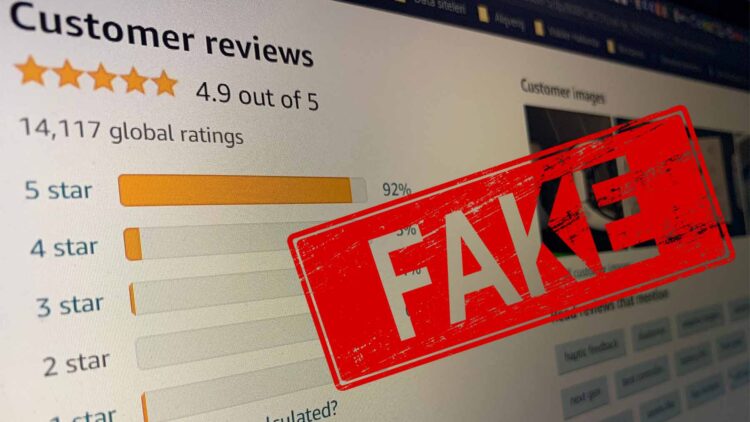
How do you know if an online product is actually good before buying it? Most of people look for answers in the reviews. Five stars? Fantastic. Hundreds of compliments? Better still. However, there’s a catch: not all of those reviews are true.
On big platforms like Amazon—and other retailers—fake reviews are a major problem. To make their goods appear better than they actually are, some vendors manipulate the system. This implies that you might spend money on something that looks fantastic on the internet but ends up being a disappointment.
Luckily, you can learn to recognize warning indicators. Nothing is “a foolproof way to spot fakes,” according to tech magazine Wired Magazine, but there are trends that can help you figure out whether or not to believe what you’re reading.
Red flags in star ratings and titles
The star rating is one of the first things people look at. Better product, more stars, right? However, fake evaluations often focus on that intuition. Take your time and pay closer attention if you come across an extensive list of flawless five-star reviews. Four-star ratings should also be used with caution. Some dishonest sellers try to seem “more real” with slightly lower scores because they are aware that customers are skeptical of too many perfect comments.
“No one is paying for two- or three-star reviews.” according to what the Wired team has observed. Generally speaking, a product with a mix of frank, middle-of-the-road remarks is more credible than one that is excessively praised.
Take a look at the titles and opening lines as well. Extremely general titles like “Nice product” or “Awesome” can raise suspicions, especially when the rest of the text is unclear and with no specifics. Honest consumers usually share what they used the product for, what worked, and what didn’t.
Comments that are “perfect” but still seem strange should be avoided. When a “customer” writes a long, positive review but points out a small “flaw” that is obviously insignificant, they may be trying to make the comment look fair and truthful when it isn’t.
Dates, patterns, and strange profiles
Be skeptical if a lot of reviews are extremely similar, show up in a short amount of time—or on the same day—and if there’s a big difference. It’s possible that the rush of comments was added just to increase the rating. Another warning sign is repeated phrases or almost identical words.
Spelling and grammar can also reveal a lot. Errors are common, but it’s worth questioning if multiple reviews seem to have been written by a robot, with odd sentence structures or repetitions of the same mistake.
When you can, click on the reviewer’s profile. Take a look at what else they have been “purchasing” and “reviewing.” It’s suspicious if someone has left excessively positive reviews for lots of unrelated products, like car parts, kitchen tools, headphones, and dog toys. If a review criticizes a rival product, pay closer attention to the profile in the “Customers also bought” section to see how they talk about other products.
Shop smart, not scared
As Wired points out, some sincere evaluations can also look odd. So look up the same product on other websites and read reviews. It’s important if something appears flawless on one platform but has negative or nonexistent reviews on another.
Also, you can research the brand to see if they have a legitimate website and if their other products seem reliable and normal.
Although they can be annoying, fake comments don’t have to ruin your holiday shopping. You can defend yourself by keeping an eye out for patterns.