
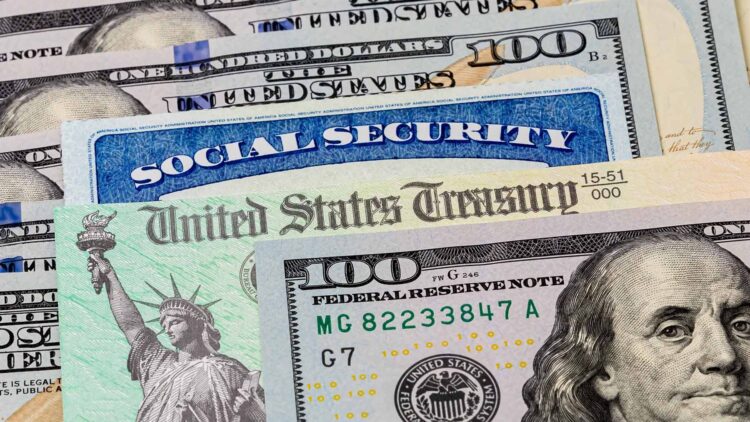
In 2026, the cost of living adjustment will change the monthly Social Security deposit. Benefits will increase by 2.8%, but on the other hand, Medicare premiums getting more expensive, and new fiscal rules are raising concerns across the U.S.
That monthly deposit means paying rent, buying food and covering everyday necessities for many people, especially for the elderly. And to know how much that “raise” is going to cover, how much will disappear between premiums and taxes is very important for all beneficiaries.
What do these changes say about the future of Social Security itself?
Every year, the agency changes the sum based on COLA (cost of living adjustment), which is based on inflation and prices from the third quarter. For the upcoming year, they have notified an increase of 2,8%—a little less than last year’s increase (3,2%). However, almost 71 million Social Security beneficiaries and about 7.5 million SSI recipients will see higher payments in 2026.
For the moment, there are no changes on eligibility: people still need 40 labor credits, which is about 10 years of paying Social Security payroll taxes. And when it comes to the credits; you would get 1 for each $1,890 made on salary (2025), limiting up to 4 credits per year. You will still be able to retire from the age of 62, but you would get a permanent reduction—the full age is from 66 to 67 depending on the year of birth—and if you hold on until 70, you can increase your payments.
However, Social Security benefits are not only for retirees though; spouses and widowers can also receive a payment depending on the couple’s record, workers with disabilities can apply for Social Security Disability Insurance. And those with very low incomes can qualify for Supplemental Security Income. And all of those payments will be affected by the new increase.
How much will beneficiaries keep?
A retiree’s monthly benefit will increase about $56 (average), that would make a check—or deposit—around $2,060. For example: If someone today receives $1,500, in January, they would get instead $1,542; the exact amount will depend on how much that person makes in a month.
The concern about this is that, although the check might be higher, many other things will increase too, and not everyone will be able to keep that plus. Why? Because up to 85% of the benefits can be subject to federal tax according to the “combined income”, which adds other income, interest-free and half of the benefits.
Most people receiving Social Security benefits are also in Medicare, and for many, the Part B premium is discounted directly from their paychecks. And although technically there will be a little more money on the check, in 2026, the standard premium will increase $17.90 compared to 2025, making it $202.90 a month. And the annual deductible of Part B will be $283. The Centers for Medicare & Medicaid Services (CMS) also announced higher hospital deductibles and coinsurance.
Then there’s the One Big Beautiful Bill Act from President Donald Trump, that stated people with 65 years old or more can claim an extra $6,000 deduction from 2025 to 2028—on top of the standard deduction by age. Which could be risky for the agency in the long term.
Analysts warn that this “relief” could slightly reduce income that’s supposed to go to Social Security and Medicare, and advance by one year the exhaustion date if it’s not replaced somehow.
Concerns about tomorrow
One of the main concerns is that in 2025, the board projected full payments until 2034, and if Congress does not move quickly enough, payroll taxes would only be able to cover about 81% of that.
If this comes to be true, the program won’t completely disappear, but Social Security payments are going to reduce—a lot.