
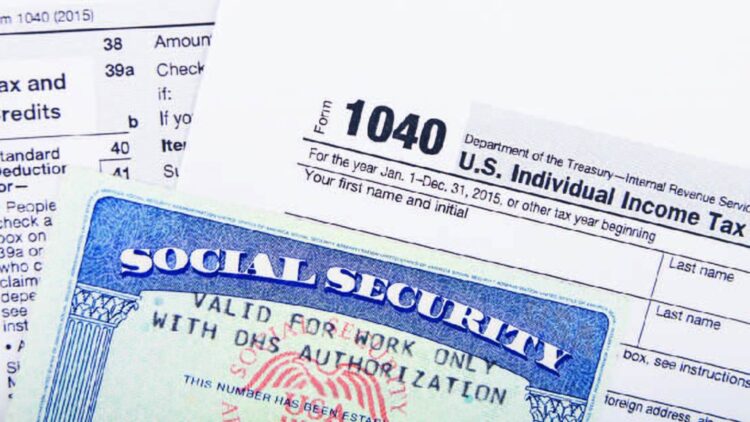
Many people think that being a beneficiary of the Social Security Administration (SSA) exempts you from paying taxes in the United States. However, the Internal Revenue Service (IRS) has income thresholds that, if exceeded, mean you will have to pay taxes. For individual tax returns, if provisional income reaches $25,000, up to 50% of it is taxable. For joint returns, the income limit is $32,000 for a maximum of 50% in taxes. However, when it comes to provisional income, the limits vary, being $34,000 for individual taxpayers and $44,000 for joint returns.
This tax on Social Security benefits has existed since the 1980s, when it only affected a small percentage of high-income individuals. Its thresholds have not kept up with inflation, meaning they have not been adjusted since then. To avoid this high tax payment if you haven’t retired yet, it is recommended to invest in Roth accounts, according to USA TODAY. If you are already retired, it is advisable to consult a professional who can guide you on how to limit these percentages and how to manage the funds in retirement plans.
Tax on Social Security
In the 1980s, the tax on Social Security benefits (SSA) was created, requiring those with a high percentage of income to pay taxes on the benefits they received. At the time, it affected only a small percentage of the population, but since it has not been modified since then, it has not kept pace with inflation, and more and more people are having to face this payment. It is common for current and future retirees to think that the benefits received from the Social Security Administration are tax-exempt, but the truth is that the Internal Revenue Service (IRS) has its own rules.
Taxable Income thresholds
The income thresholds are low for benefits to be taxable. Depending on the filing method, the parameters vary:
- Individual taxpayers: If your provisional income reaches $25,000, up to 50% of your benefits are taxed.
- Married joint filers: The income limit is $32,000 for a maximum of 50% in taxes.
If provisional income exceeds these amounts, there are other parameters. According to USA TODAY, provisional income consists of half of all your Social Security benefits, your taxable income, and part of your nontaxable income. With this in mind, the parameters are as follows: if you reach $34,000 in provisional income as an individual filer and $44,000 as a joint filer, your benefits will be taxed up to 85%. This does not mean that they keep 85% of your money. It means that the IRS will count 85% of what you receive from retirement as ‘taxable income’ and will tax it as if it were a regular paycheck.
What can be done about it?
The media outlet USA TODAY explains that the most useful tool for future retirees is to make use of Roth accounts, which will help them minimize taxes when investing in them. In this case, their non-taxable distributions do not count toward determining if they have reached the Social Security tax threshold. It’s like an ‘invisible’ wedge for the IRS. If you are already retired, it is recommended to consult a tax professional who can help you limit the taxes on the benefits you receive.
Frequently asked questions
Why does almost everyone pay taxes now?
Because the income thresholds for taxing you haven’t changed since the 1980s. Since the cost of living has increased (inflation) but the rules are old, today it’s very easy to exceed those limits and have to pay.
Is the IRS going to take 85% of my paycheck?
No. It just means that the IRS will count 85% of your benefit as “extra income” to calculate your taxes. It doesn’t mean they keep 85% of your money; that part just “counts” for your annual tax return.
How can I avoid paying so much if I’m not retired yet?
By investing in Roth accounts. The money you withdraw from there in the future is “invisible” to the IRS and doesn’t add to your income, which helps you stay below the limits so you’re not taxed on your retirement.