
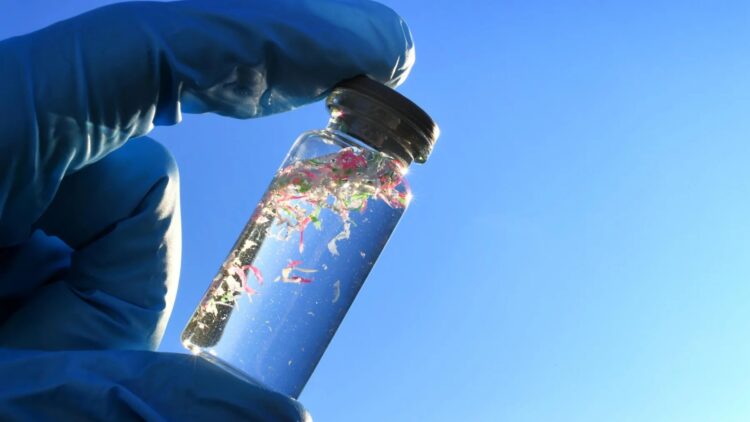
A new study, published in the journal Environment International and conducted by experts from the University of Exeter and the Plymouth Marine Laboratory in the United Kingdom, has highlighted a serious and dual threat posed by microplastic pollution in our aquatic ecosystems. These tiny plastic fragments not only represent a risk to biology on their own and due to their ability to adsorb other toxic contaminants, but they also act as surfaces for the development of microbial biofilms, or ‘plastispheres.’
The main finding is that these plastispheres can host and enhance the survival of pathogenic bacteria and, crucially, antimicrobial resistance (AMR) genes, raising concerns for public health. The study conducted examined the accumulation of bacteria on 4 mm particles in the Truro river system and found that this interaction facilitates the spread of diseases and hinders the treatment of infections, which calls for urgent action to mitigate plastic pollution and safeguard human and environmental health.
Microplastics
The concern surrounding microplastics has always focused on their toxic effects, whether direct or indirect. However, the study by researchers from the University of Exeter and the Plymouth Marine Laboratory in the United Kingdom introduces an additional risk factor: the potential of these particles to serve as carriers of dangerous bacteria.
According to marine scientist Pennie Lindeque from the Plymouth Marine Laboratory, “Our research shows that microplastics can act as carriers of harmful pathogens and antimicrobial-resistant bacteria, enhancing their survival and spread”. This scenario creates serious health risks, including the entry of disease-causing bacteria into the food chain, or an increase in the spread of drug-resistant bacteria, making infections more difficult to treat and raising the dangers associated with medical procedures.
Study in the Southwest of England
The research results were obtained after conducting a field test in the Truro river system, located in the southwest of England. Small plastic granules (commonly used in manufacturing and water treatment) and polystyrene fragments, all of a similar size (around 4 mm), were submerged using ropes. Four sampling points along the river were selected in order to cover different levels of water cleanliness, strategically chosen based on their proximity to a wastewater treatment plant and a hospital.
Tiny glass and wooden beads were also included in the experiment, along with the so-called plastic bio-beads, specifically used in water treatment to host bacteria that assist in purification, but which have previously escaped into river systems on several occasions.
Immersion results
The experiment lasted two months, after which the bacteria that had accumulated on the different materials that had been submerged were analyzed. The researchers found that the biofilms formed on the microplastics contained more antibiotic-resistant bacterial genes compared to the biofilms found on wood or glass. Additionally, specific harmful pathogens such as Flavobacteriia and Sphingobacteriia were more present on the microplastics located downstream from the hospital and the wastewater treatment plant, even in areas where these bacteria were not especially abundant. According to microbiologist Aimee Murray from the University of Exeter, “Our research shows that microplastics are not just an environmental problem, but they can also play a role in the spread of antimicrobial resistance”.
What now?
In order to gain a more comprehensive understanding of the impact of the presence of these microplastics, the research team plans to expand the number of sampling sites and assess a wider range of environmental conditions. They also emphasize the importance of taking further measures to prevent plastics, such as bio-beads, from reaching the natural environment. According to Emily Stevenson, a marine scientist at the University of Exeter, “we advise that any volunteers participating in beach clean-ups wear gloves during the cleaning activities and always wash their hands afterward.”