
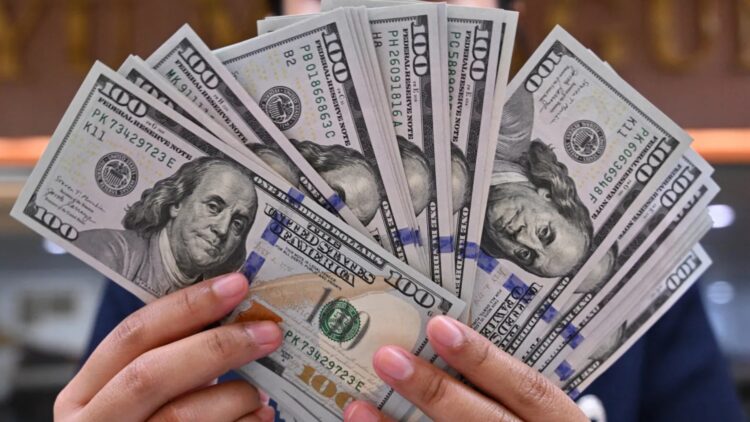
With the arrival of the new year 2026, there will also be an increase in the minimum wage in several states across the United States. Although the federal minimum wage has been stagnant for over a decade, states have been forced to make periodic updates to respond to the pressure caused by the cost of living for thousands of citizens. Currently, the federal minimum wage is $7.25 an hour, which does not alleviate the impact and pressure of rising living costs.
California, New York, and Arizona are the states leading this economic adjustment, where the increase will result in wages of $16.90, $17.00, and $15.15 an hour, respectively. Other states that will also see an increase include Colorado, Hawaii, Connecticut, Maine, Michigan, Minnesota, Missouri, Montana, New Jersey, Ohio, Rhode Island, South Dakota, Vermont, Washington, Virginia, Nebraska, and Washington D.C.
Salary increase in 2026
The federal minimum wage has been stuck at $7.25 an hour for decades, which is laughable when it comes to coping with the high cost of living in the United States, especially due to inflation. For this reason, some jurisdictions are forced to introduce mandatory increases, allowing Americans to mitigate the impact of the cost of housing, transportation, and food. Therefore, starting January 1, 2026, several states will implement minimum wage increases, and the amounts will vary depending on each legislation. The states leading this wage increase are:
- California. The percentage increase is calculated based on the annual cost-of-living adjustment of the Consumer Price Index for Urban Wage Earners (CPI-W). It applies to most employees, regardless of the size of the employer, and will be $16.60 per hour (an increase of $0.40 per hour).
- New York. As it has done so far, it will implement a scheme with a gradual scale, depending on the region: New York City, Long Island and Westchester, and the rest of the State. The increase will be $0.50 per hour, resulting in a wage of $17.00 per hour, while in the rest of the state it will be $16.00. Starting in 2027, annual wage adjustments will be calculated based on the Consumer Price Index (CPI-W).
- Arizona. In this case, the adjustment is based on Proposition 206 (Fair Wages and Healthy Families Act), which ties the minimum wage to changes in the Consumer Price Index (CPI-W). An increase of $0.45 will be set, bringing it to $15.15 per hour.
- Colorado. It bases its increase on the cost-of-living adjustment of the Consumer Price Index (CPI-W) for the Denver-Aurora-Lakewood area, as required by state law. The new salary will be $15.16, an increase of $0.35.
Higher minimum wages than the state rate
Similar to Colorado County, they have established minimum wages higher than the state rate, and it will be the employers who must pay the rate, as indicated by the legislation. This is the case in:
- Connecticut: The increase is calculated according to the Connecticut state law that indexes annual minimum wage adjustments to the federal Employment Cost Index (ECI). The minimum wage will increase by $0.59 per hour, to reach $16.94 per hour.
- Hawaii: In this case, the adjustment is based on Hawaii Legislative Session Law 114 of 202, which sets gradual increases to reach $18.00 per hour by January 1, 2028. In this state, one of the highest adjustments in the country will be applied, $2.00 per hour, to reach $16.00.
More states join the increase
These are not the only states that have announced salary increases starting January 1, 2026. In total, 23 states and more than 60 cities in the United States are affected, with 19 applying the adjustments starting January 1, while others, such as Florida, Alaska, and Oregon, will do so throughout the year. The rest of the states that will raise their minimum wages are: Maine, Michigan, Minnesota, Missouri, Montana, New Jersey, Ohio, Rhode Island, South Dakota, Vermont, Washington, Virginia, Nebraska, and Washington D.C.
Frequently asked questions
In which states will the salary increase take effect on January 1, 2026?
California, New York, Arizona, Colorado, Connecticut, Hawai, Maine, Michigan, Minnesota, Missouri, Montana, New Jersey, Ohio, Rhode Island, South Dakota, Vermont, Washington, Virginia, Nebraska, and Washington D.C.
Why does this increase occur?
To help Americans to mitigate the impact of the cost of housing, transportation, and food, cause by the inflation.