
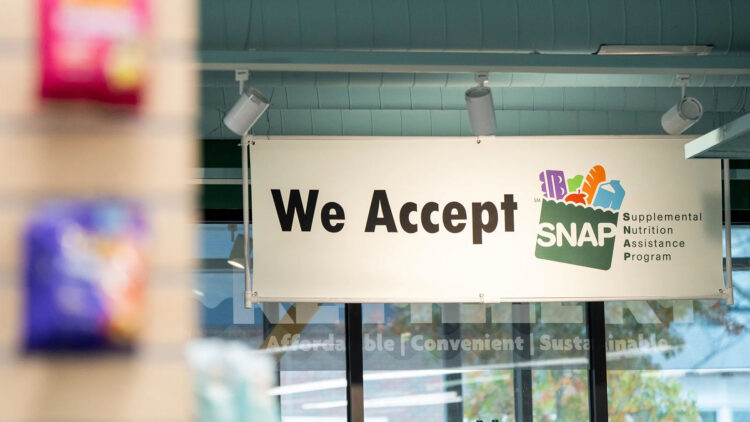
The U.S. Department of Agriculture (USDA) has announced a new reform for the Supplemental Nutrition Assistance Program (SNAP): Secretary of Agriculture Brooke L. Rollins and Secretary of Health and Human Services Robert F. Kennedy Jr. announced six new state exceptions that will change the “food to buy” starting in 2026 as part of the Make America Healthy Again (MAHA) initiative.
In order to prioritize foods with higher nutritional value and restrict access to ultra-processed products within SNAP, Hawaii, Missouri, North Dakota, South Carolina, Virginia, and Tennessee requested these exceptions. The change would improve health and make it clear what SNAP funds should support by putting nutrition at the center of public policy.
A shift toward nutrition as policy
Leaders gave clear explanations of the reform. Secretary Rollins declared: “We are taking bold and historic steps to reverse the epidemic of chronic disease.” “With these new exemptions, we are empowering states to protect children from the dangers of highly processed foods.” According to Kennedy, the idea also has to do with responsible spending and results: “We can’t keep funding programs that make people sick and then pay again to treat those diseases.”
Dr. Mehmet Oz, the administrator of the Centers for Medicare and Medicaid Services (CMS), pointed out the policy has a bigger national goal, saying that it achieves what President Trump refers to as a “return to a healthy America.”
State leaders respond
Governor Mike Kehoe of Missouri points out the fact that “Missouri is proud to collaborate with the Trump Administration.” He continued: “We are refocusing SNAP to maximize the nutritional health of families and support our agricultural production.”
For Kelly Armstrong, the governor of North Dakota, “This waiver brings us closer to becoming the healthiest state in the country.”
“Promoting nutritious food ensures proper use of taxpayers’ money,” According to South Carolina Governor Henry McMaster who emphasized the management of public funds.
In addition, Governor Bill Lee of Tennessee states that “These innovative solutions will strengthen families for generations. I appreciate the swift approval of our SNAP waiver.” And finally, Glenn Youngkin, the governor of Virginia, connected the changes to general health, saying, “Modernizing SNAP is key to empowering Virginians toward healthier lives.”
Innovation labs and incremental change
Secretary Rollins introduced the waivers as part of the USDA’s Innovation Labs on her first day of office. The plan is to test what works locally and at the same time, invite governors to suggest modifications that will improve the federal nutrition systems.
Twelve states have taken part in these reforms thus far. Before approvals were granted to Arkansas, Idaho, Indiana, Iowa, Nebraska, Utah, and Hawaii, Missouri, North Dakota, South Carolina, Virginia, and Tennessee. According to each state’s request, each exemption lays out particular lists of products that are excluded; all modifications will take effect in 2026.
Toward a healthy SNAP
The setup allows states to create more specific shopping regulations while sticking to the more general federal goal. However, Snap beneficiaries are waiting on clearer definitions about what they will and won’t be able to buy with their benefits.
These changes may take some time for families to adjust, even though the purpose of these petitions is to improve health. Not everyone agrees. For many Americans, it means that when they go grocery shopping, they will have to leave behind the sweet treat you were planning to eat on the weekend, or make a double purchase and pay it apart, is adding more effort to something it should be already easier.
As a result, each waiver has a start date of 2026 and a specific state list; the process of implementation will be planned and very organized.