
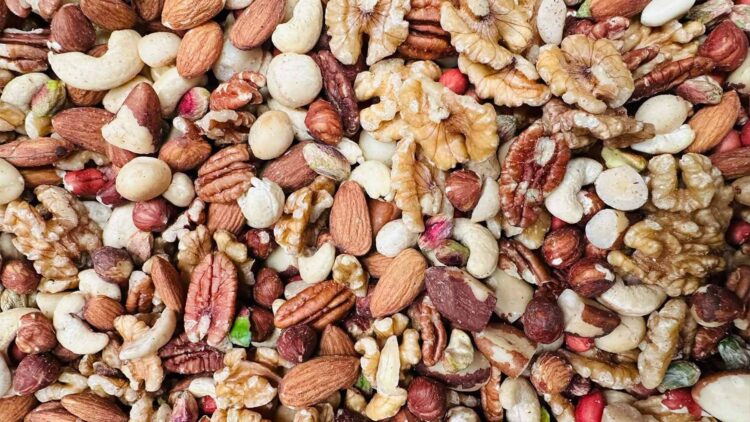
Nuts are a very popular snack, and why? Because they provide protein, dietary fiber, healthy fats, vitamins, minerals, and antioxidants. They’ve also been associated with better heart health and lower cholesterol levels.
And although it all seems positive, sometimes “more” doesn’t mean “better.” The Academy of Nutrition and Dietetics explains that the key is in moderation. A handful a day (around 1/4 cup) is enough. If you consume more than that, problems might appear.
Excess of anything is bad
Here are a few examples of what could go wrong if you eat too many of them.
1. They can mess with your weight goals: Nuts can help with cravings because they’re actually filling, but they have a lot of calories; one ounce (28 g) of almonds has 160 calories. If you double or triple the portion without adjusting the rest of your food, then at the end of the day you’re adding hundreds of extra calories. With time, this can make it difficult to keep or lose weight.
2. Digestive discomfort: eating more than needed can cause gas, bloating, or diarrhea. And this is because they have components like phytates and tannins and a lot of fat—yes, healthy fats, but in excess it can still be too much. Experts recommend respecting the portions or try other versions like germinated nuts, which are easy to digest for many people.
3. Watch out for the selenium: Brazil nuts are one of the strongest sources of selenium, which is a mineral that’s essential for the thyroid and the immune system. But when you have too much of it. With only a portion of 6-8 Brazil nuts, this source can go up to ten times more than the recommended amount. And selenium excess can cause fragile damage: weaker nails, bad breath, muscle pain, and in the long term, it can even damage the nervous system. That’s why nutritionists suggest limiting to a maximum of 4 Brazil nuts a day.
Enjoying nuts without the harm
- Measure your portions: as mentioned before, the problem usually comes with the excess. Nutritionist recommendations are a handful a day tops, which is about 1/4 cup.
- Mix with other nuts: try almonds, walnuts, hazelnuts… Selenium level can be reduced if you mix it up (especially if you’re eating Brazilian nuts). And besides, you can also get different nutrients like dietary fiber, proteins, and healthy fats.
- Take care of your digestion: If you feel any discomfort, reduce the amount you’re consuming, or try other types of nuts like soaked or germinated ones.
Keep in mind the basic information: nuts are good and healthy; they have antioxidants and a great effect on cholesterol levels, but just as with anything consumed in excess, it will not be as beneficial.
Eating nuts, but in small amounts
People eat them mostly as snacks, but the problem is they seem so small and so healthy that many go, “I’ll just have a few more,” thinking to themselves it probably won’t change much. But after having two or three more of those handfuls, your body won’t agree with you, and what you ate thinking was only beneficial might not be anymore.
Jerlyn Jones, nutritionist and speaker for the Academy of Nutrition and Dietetics, says, “The benefits of nuts definitely outweigh any other disadvantages.” So the advice is not to stop eating them but rather controlling quantities.
They are great allies for healthy alimentation, but according to the experts, regulation is the secret.
Enjoy the protein, fiber, healthy fats, and antioxidant sides, but in little portions. But also be aware of the other side of the coin: selenium and its reaction with thyroids. This way you will only get the good part.