
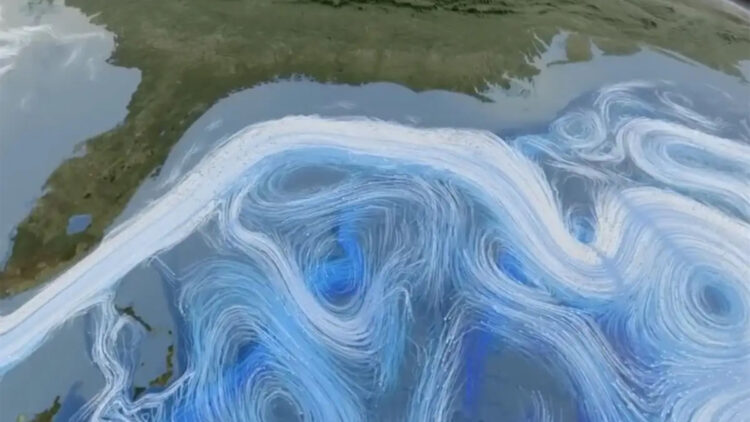
The AMOC (Atlantic Meridional Overturning Circulation) may be on the verge of a catastrophic tipping point because of a hidden chain of ocean changes, according to scientists from Norway, Sweden, Germany, and the United Kingdom. The AMOC, which is often linked with the Gulf Stream, facilitates the transfer of heat across the Atlantic Ocean, so contributing to the overall equilibrium of the climate.
The Arctic Ocean’s Beaufort Gyre is the new source of concern. The Beaufort Gyre may not be able to continue storing fresh water as global warming speeds up the melting of polar ice. The AMOC may become weaker and, in the worst situation, disintegrate if that water leaks into the North Atlantic. The interaction between a swelling “reservoir” and the Mid-Atlantic Ridge, where ocean crust is formed, is also investigated through simulations.
The broader context of climate change, CO2 emissions, the demand for renewable energy sources, photovoltaic solar energy, and a quicker energy transition is where all of this takes place. Is it possible to lower risk before the system collapses?
What the study says
Regional climates are regulated by the Atlantic Meridional Overturning Circulation (AMOC), which helps in heat redistribution through the Atlantic Ocean. Higher sea levels and more severe severe weather, as well as changes that extend well beyond the North Atlantic, might result in a collapse.
One major stress point identified by researchers is the Beaufort Gyre, a huge, wind-driven “storage tank” of low-salinity water in the Arctic Ocean. The gyre could stop being able to continue gathering fresh water if sea ice continues to melt.
A flood of fresh water reaching the North Atlantic after that storage fails would reduce the salinity and make it more difficult for the AMOC to continue its overturning movement.
“This gyre decline is predicted both under a high-emission scenario and under an intermediate’middle of the road’ emission scenario,” the study indicates, suggesting that this danger shows in many emission paths. Additionally, model simulations look at a “Atlantic reservoir” interacting with the Mid-Atlantic Ridge, indicating that it may be challenging to contain released energy and expanding oceanic crust cracks once failure starts.
What could happen next
For fresh water, the Beaufort Gyre serves as a natural dam. That dam could break down when arctic ice melts more quickly. A significant discharge into the North Atlantic would lower the surface salinity, which would block the AMOC’s density-driven “conveyor belt.”
The climate balance, which includes storm paths and sea level patterns, may be upset by a weaker overturning, which means less heat flowed northward. The AMOC’s engine loses some of its power if the system is overloaded with fresh water. The study presents this as a potential tipping point that, once reached, may be difficult to overcome.
It’s also important to notice that despite the system being under more stress due to CO₂ emissions, the AMOC has not demonstrated a “detrimental decline” over the previous 60 years, according to a different line of research that is referenced in the paper.
What can lower the risk
Reducing CO2 emissions is the most obvious way to slow down global warming and the melting of polar ice. This entails accelerating the energy transition from fossil fuels to renewable sources, such as solar photovoltaics.
The need for fossil fuels can be reduced by policies that promote clean power, increased efficiency, and updated heating systems. Choosing clean power, upgrading insulation, or replacing outdated heating equipment all benefit consumers.
Together, these actions reduce the likelihood of an overfilled Arctic “reservoir” and the strain on the AMOC, but none of them is a cure.
Keeping the system in balance
Preserving the climate balance that supports ecosystems, businesses, and societies is the goal of protecting this system. By taking action now, we maintain our options and the critical circulation of the Atlantic.