
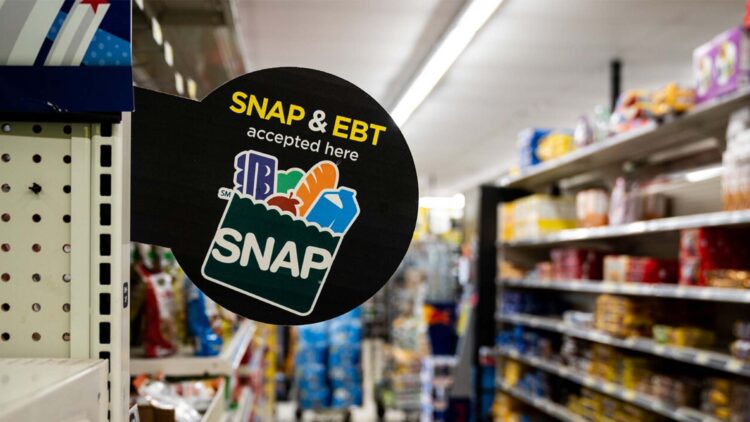
Supplemental Nutrition Assistance Program (SNAP) payments, also known to as food stamps, will be increased for millions of households in the United States beginning October 1, 2025, as part of the yearly Cost of Living Adjustment (COLA) that is managed by the U.S. Department of Agriculture (USDA).
In addition to raising income ceilings and standard deductions to allow more families to receive social assistance that promotes food security, these revisions take inflation and food prices into account. Meanwhile, the Federal Law of 2025, a new set of regulations from the U.S. Congress, introduces more extensive mandatory labor requirements that may impact over 1.2 million participants.
Due to local food costs, the maximum benefit amounts in Alaska and Hawaii will be higher than those in the 48 neighboring states and Washington, D.C.
Benefits, income limits, and deductions
Maximum monthly SNAP benefits (48 states + Washington, D.C.) rise:
1 person: $298 (+$6)
2 people: $546 (+$10)
3 people: $785 (+$17)
4 people: $994 (+$19)
5 people: $1,183 (+$25)
6 people: $1,421 (+$31)
7 people: $1,571 (+$35)
8 people: $1,789 (+$33)
The minimum benefit goes up from $23 to $24 per month for households with one or two residents. The caps are higher in Alaska and Hawaii due to the higher local grocery prices; for example, a family of four may receive up to $1,689 in Hawaii and up to $1,995 in rural Alaska.
As income thresholds gets higher, more households can be eligible. The new gross monthly income limitations for the 48 states and Washington, D.C., are as follows:
1 person: $1,696 (before $1,632)
2 people: $2,292 (before $2,215)
3 people: $2,888 (before $2,798)
4 people: $3,483 (before $3,380)
5 people: $4,079 (before $3,963)
6 people: $4,675 (before $4,546)
After deductions, a four-person family’s net income can go up to to $2,680.
For benefit calculations, countable income is reduced by a slight increase in standard deductions: $209 (prior to $204) for one to three people. $223 (previously $217) for four people. Five people for $261 (before $254). Deductions for housing, like the homeless shelter deduction, also slightly increase.
Utility changes and New Work rules
Signed on July 4, 2025, the Federal Law of 2025 expands SNAP’s mandatory work requirements, marking the largest legislative change of the year. Previously only valid up to age 54, adults 55 to 64 without dependent children (ABAWDs) are now required to work at least 20 hours per week or take part in approved training.
Parents of children 14 years of age and older are also subject to new criteria, and veterans, homeless individuals, and former foster teenagers are required to provide documentation of their employment or qualifying training. The overall household benefit falls if any household member is no longer eligible due to disagreement with rules.
Utility rules are changing too. The Standard Utility Allowance for heating and cooling in homes without elderly or disabled members is eliminated by law.
In order to calculate benefits, more families will have to provide actual utility bills; if actual costs are less than previously calculated, payments could decrease. Although the majority of states do not impose asset limitations, the maximum amount of assets is still $3,000 for households with elderly or disabled members and $4,500 for those without. Lastly, there will not be an extensive program evaluation until October 1, 2027; further increases are restricted to COLA alone.
How to prepare
These adjustments give many households a modest but significant gain, particularly in cases when food costs exceed incomes. Higher limitations in Alaska and Hawaii acknowledge local expenses, and COLA in Washington, D.C., reflects metropolitan price pressures. However, some will find the extra mandatory employment rules challenging.
Three easy steps can help if you receive food stamps through SNAP:
To find out if your benefit has changed, check your household size and the new limits. Verify the work or training requirements for each adult who has to follow them, keep fresh records. Additionally, if your household is impacted by the allowance change, collect utility invoices so that calculations truly show expenditures.