
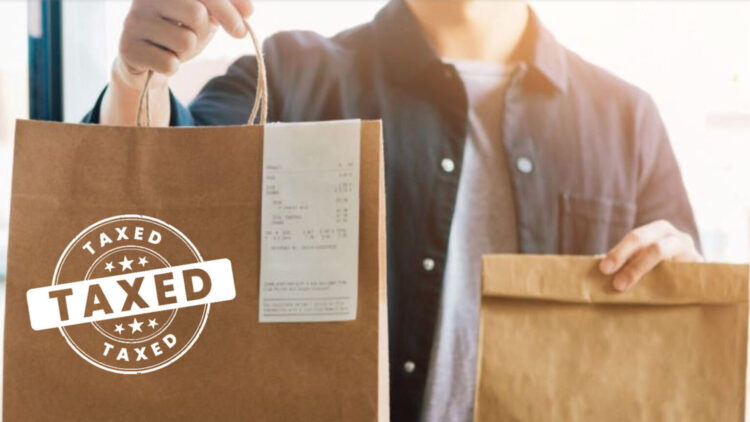
The cost of ordering something to be delivered right to your door has quietly raised in some areas of the United States. Customers in two states are now seeing a new line on their receipts in addition to shipping, service fees, and gratuities: “doorstep taxes” or “delivery taxes.” People who depend on online shopping for groceries, clothing, or everyday items may be surprised by these small fees that are added automatically at checkout.
These retail delivery fees are currently only in effect in two states, but legislators in twelve more are considering similar regulations. What many more Americans will see on their delivery bills in the coming years may be a preview of what is already happening in Colorado and Minnesota.
What “doorstep taxes” are and where they apply
Retail delivery fees (doorstep taxes) will be added on top of the state sales tax and standard delivery fees. The basic idea is that the state adds a tiny additional fee to your order if you purchase taxable items online and have them delivered to your house by car.
Retail goods, several kinds of taxable groceries, and restaurant orders are usually tied to the surcharge. Prescription drugs and the majority of staple foods are a few tax-free necessities that are generally excluded. The fee is applied to each eligible order.
These fees show up on deliveries from delivery services like Uber Eats, Amazon, Walmart, Instacart, DoorDash, and others that most people are familiar with. Similar to sales tax, retailers or marketplaces collect the fee on behalf of the state and then distribute the funds.
In 2022, Colorado became the first state to implement a doorstep tax across the entire state. There, taxable goods delivered by motor vehicle are subject to the fee; however, local retailers with annual sales of less than $500,000 and out-of-state retailers with sales of less than $100,000 to Colorado customers are exempt from it. Minnesota introduced its own version in 2024, charging a flat $0.50 fee for deliveries totaling $100 or more that include clothing or taxable items.
Twelve more states—Hawaii, Illinois, Indiana, Maryland, Mississippi, New York, Ohio, Oregon, Pennsylvania, Rhode Island, Washington, and Wisconsin—are concurrently considering similar legislation.
Why states like them—and why some people don’t
These fees’ supporters interpret them as a reaction to the expansion of delivery services. Because delivery fleets are using more electric and hybrid vehicles, there are more vans on the road, more wear on infrastructure, and less money from traditional fuel taxes as more people shop online—a tiny sum is collected from each order through doorstep taxes, which are used to fund infrastructure and transportation initiatives.
Opponents argue that these additional costs make things more difficult for both customers and businesses. Administrative complexity is increased for businesses, particularly small retailers, by keeping track of when the fee applies and how to report it. Additionally, consumers who already pay service fees, fuel surcharges, local minimum wage adjustments, tips, and sales tax are said to be more financially burdened by the additional costs—on top of the inflation. The expenses may pile up quickly for those who rely on delivery due to schedules, distance, or disabilities.
What shoppers should watch for
The fact that 12 more states are considering the concept, means is getting recognition. It might be time to start paying more attention to the breakdown of costs before the checkout when your order, wherever you are.
For now, some might group orders, select in-store pickup, or, if feasible, visit physical stores. Others who rely on delivery just have to budget for it.
But is it really up to the people who shop online to pay the bill for infrastructure and road maintenance?