
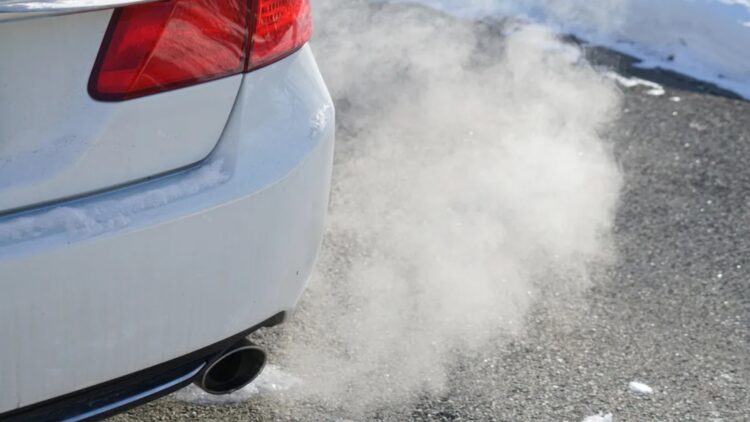
Did you know that the seemingly harmless act of leaving your car running unattended can end up costing you a fine? In fact, it happens in 35 states across the country because it is considered a violation of vehicle idling laws. These types of laws, known as anti-idling laws, aim to reduce unnecessary engine pollution and also decrease car theft. While in some jurisdictions it only applies to certain roads or streets, in others it has more to do with the amount of time the vehicle is left running unattended.
This latter case is known as “puffing,” and it refers to leaving the car warming up while the driver is not present. According to the Environmental Protection Agency (EPA), officers are authorized to issue fines in these cases. Some of the states where anti-idling laws are enforced include New York, Virginia, Georgia, Arizona, and California, among others.
Laws against Idling or Anti-Idling
Something as simple as leaving a car running and unattended is considered a crime in 35 states in the United States. This is legislated through so-called anti-idling laws, which aim to reduce pollution caused by unnecessary running engines and, at the same time, decrease car thefts. The rules are similar in all states: in some, they only apply when the vehicle is parked in alleys, public roads, or parking lots, while in other cases they focus on the amount of time the engine is running without moving.
Another practice considered dangerous is “puffing,” meaning letting the car warm up when the driver is not present. According to authorities, “Car theft is usually a crime of opportunity. If a criminal sees a running vehicle, they can get in and drive away”.
Variations by state
There are several states regarding leaving a car running. Leaving it running in front of a house is not prohibited, nor are cases involving vehicles with remote start. However, authorities remind that thieves have the ability to clone the signal, keeping the risk of theft present. Other states are less permissive, as they have time limits. This is the case in Maricopa County, Arizona, where leaving the engine running for more than five minutes is illegal.
The same applies in states like Georgia and Pennsylvania, although the time limit is extended when temperatures drop. Naturally, the laws have exceptions for emergency units such as police cars, ambulances, or fire trucks. According to the Environmental Protection Agency (EPA), police officers are trained and authorized to issue fines in these cases. “As a result, you could receive a ticket and a fine,” the agency states.
Which states have anti-idling laws?
The list of states that count with these laws includes:
Arizona, California, Colorado, Connecticut, Delaware, District of Columbia, Georgia, Hawaii, Illinois, Louisiana, Maine, Maryland, Massachusetts, Minnesota, Missouri, Nevada, New Hampshire, New Jersey, New York, Ohio, Oregon, Pennsylvania, Rhode Island, South Carolina, Texas, Utah, Vermont, Virginia, Washington, Wisconsin, and Wyoming.
Frequently asked questions
What is the purpose of these laws?
The aim is to reduce pollution caused by unnecessary running engines and, at the same time, decrease car thefts.
What does “puffing” consist of?
It consists of letting the car warm up when the driver is not present.